Why a Community Orchestra’s Season Opener Matters More Than It Might Seem
On a Friday evening this fall, the Baker Theatre inside the Granville Arts Center on North Fifth Street will fill with the sound of a full orchestra. The Garland Symphony Orchestra opens its fall 2026 season there, presenting a program of classical and popular orchestral works under the direction of Music Director Robert Carter Austin. Concerts begin at 7:30 PM.
For a city of Garland’s size and demographic complexity — a community that has grown steadily into one of the more culturally layered municipalities in the Dallas-Fort Worth metroplex — the return of the symphony each fall is not a minor footnote on the arts calendar. It is, in practical terms, one of the few institutions in the city that places a professional-grade, large-ensemble musical experience within reach of residents who might otherwise need to drive to downtown Dallas or the Arts District to find anything comparable.
That proximity is worth examining on its own terms.
What the Baker Theatre Setting Contributes
Does venue scale shape the listening experience?
The Baker Theatre, housed within the Granville Arts Center at 300 N. Fifth St., is described as an intimate setting — a word that carries real meaning in the context of orchestral performance. Larger concert halls in major metropolitan venues offer grandeur and acoustic volume, but they can also impose distance between performer and audience. A more contained room collapses that gap.
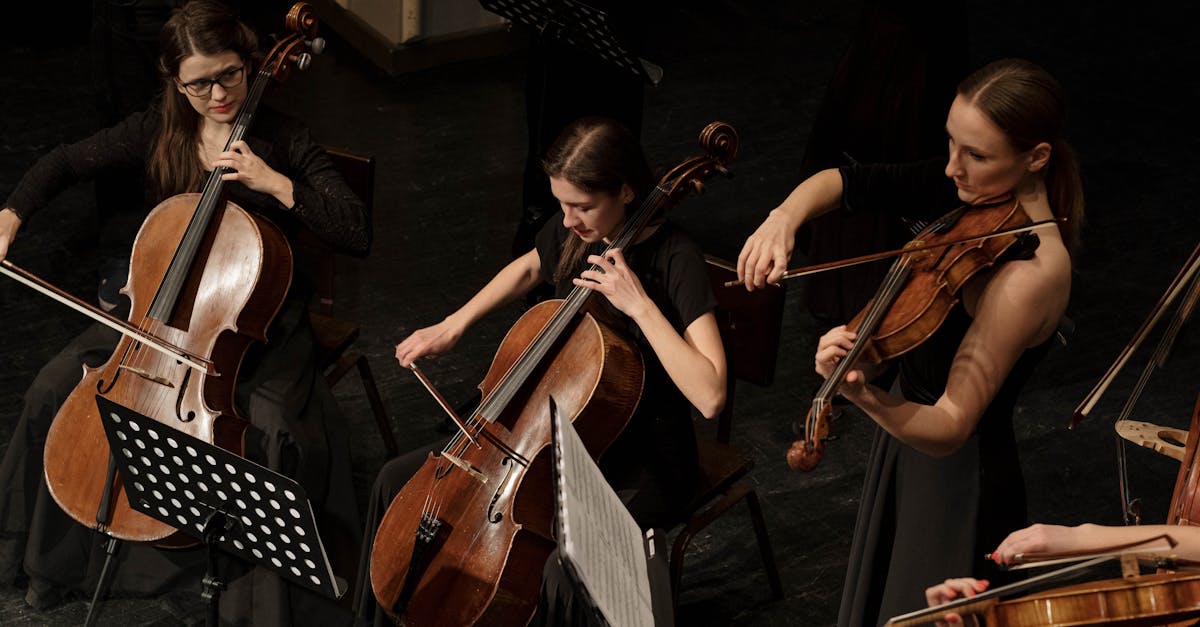
For listeners who are newer to orchestral music, or who attend infrequently, that physical closeness to the musicians tends to make the experience less abstract. You can watch a violinist’s bow arm. You can observe the way a conductor like Austin shapes a phrase in real time, the baton tracing something that, once you have seen it enough times, begins to feel like a second language made visible.
The Granville Arts Center itself serves as the primary performing arts hub for the city, hosting a range of productions across disciplines — theatre, dance, music — throughout the season. The Garland Symphony’s residency there anchors the building’s identity as a place where serious artistic work happens on a recurring basis, not just during headline events.
Who Is Robert Carter Austin, and Why Does Conductor Continuity Matter?
What does sustained artistic leadership do for an ensemble?
Robert Carter Austin leads all Garland Symphony Orchestra concerts as Music Director. In regional orchestras, the role of music director carries outsized significance. Unlike a major metropolitan ensemble where an acclaimed conductor might cycle through guest engagements, a community or regional orchestra often develops its sound, its repertoire identity, and its audience relationship around a single sustained artistic vision.
When a music director remains with an ensemble across multiple seasons, the results tend to be cumulative. Musicians develop shared interpretive instincts. Programming can build thematically across years rather than defaulting to crowd-pleasing standards in isolation. Audiences, too, develop a relationship with the conductor’s aesthetic — they begin to understand what a program will feel like before the first note is played, based on accumulated experience.
That kind of continuity is something larger institutions sometimes struggle to maintain, given the competitive market for high-profile conductors. A regional orchestra with a stable music directorship can, paradoxically, offer a more coherent artistic identity than ensembles with far larger budgets.
What the Programming Signals About the Orchestra’s Audience
How does a regional orchestra balance accessibility and ambition?
The fall 2026 season opener is described as featuring a program of classical and popular orchestral works — a formulation that reflects a deliberate programming philosophy common to successful regional ensembles. Pure classical programming, weighted toward unfamiliar repertoire, tends to limit audience growth. Programming that leans entirely on popular arrangements risks signaling to core subscribers that artistic ambition has been subordinated to ticket sales.
The blend the Garland Symphony employs positions the ensemble to serve both constituencies simultaneously: the longtime subscriber who wants to hear a Romantic-era symphony or a concerto played with genuine craft, and the newer attendee who finds an entry point through something more immediately recognizable. Done well, that kind of programming builds the audience from both directions — deepening engagement among regulars while reducing the perceived barrier to entry for first-timers.
For Garland specifically, that calculation has particular relevance. The city’s population includes a substantial number of residents whose cultural backgrounds include strong traditions of classical and semi-classical music — South Asian communities with deep roots in both Western and Indian classical forms, Vietnamese communities with their own rich musical heritage, and long-established families with generations of ties to the city. An orchestra that programs thoughtfully can speak to multiple layers of that audience.
What the 7:30 PM Friday Start Time Communicates
Is scheduling a form of civic statement?
Concerts beginning at 7:30 PM on Fridays places the Garland Symphony in a practical sweet spot. The timing is late enough to accommodate working residents who cannot leave early, while early enough to make the evening manageable for those with families or long commutes home afterward. Friday positioning separates the concerts from weekend competition — youth sports, family commitments, and the general compression of Saturday schedules.
It is a small logistical detail, but scheduling decisions in the performing arts are rarely accidental. They reflect an orchestra’s understanding of its audience’s actual lives, which is ultimately a form of respect.
Why This Belongs on Garland’s Cultural Map
What does a functioning symphony signal about a city’s civic health?
Cities that sustain orchestras across decades are making a long-term argument about what kind of place they intend to be. The Garland Symphony Orchestra’s continued operation — with a music director, a dedicated venue, and a full fall season — represents the accumulation of community investment, volunteer hours, donor support, and municipal commitment to the arts infrastructure represented by the Granville Arts Center.
The Garland Cultural Arts organization, which supports the broader performing arts ecosystem at the Granville Arts Center and the Plaza Theatre, provides the institutional scaffolding within which the Symphony operates. That relationship between the presenting organization and the performing ensemble matters: it allows the orchestra to focus on artistic work rather than venue management, ticket logistics, and facility upkeep.
For residents considering how to spend a Friday evening this fall, the Baker Theatre on North Fifth Street offers something that streaming services and arena concerts do not — the specific, unrepeatable experience of a live ensemble filling a room with sound, in a city that has chosen to make that experience available close to home.


